Ever ripped up a freshly installed vinyl floor only to find it bubbling like a science experiment gone wrong? You’re not alone. In my 14 years as a residential flooring installer—yes, I’ve crawled through more crawl spaces than I care to count—I once watched a $3,200 luxury vinyl plank job peel off a concrete subfloor in a humid basement like wet newspaper. The culprit? A water-based adhesive that couldn’t handle moisture migration. That’s when I learned: sometimes, you need the heavy artillery. Enter solvent based vinyl flooring adhesive.
In this no-BS guide, you’ll discover exactly when and why to use solvent-based adhesives for vinyl flooring, how to apply them safely and effectively, and—critically—when not to touch them with a ten-foot trowel. We’ll cover health precautions, real-world case studies, product comparisons, and even bust one dangerously popular “hack” that could void your warranty.
Table of Contents
- Why Would Anyone Use Solvent-Based Vinyl Flooring Adhesive in 2024?
- How to Apply Solvent-Based Vinyl Adhesive Like a Pro (Without Losing Your Lungs)
- 5 Non-Negotiable Best Practices for Solvent Adhesive Success
- Real Talk: How a Solvent Adhesive Saved a Commercial Gym Floor
- FAQs About Solvent Based Vinyl Flooring Adhesive
Key Takeaways
- Solvent-based vinyl flooring adhesive offers superior bond strength on non-porous substrates like existing vinyl, metal, or sealed concrete.
- These adhesives are not suitable for DIYers without proper ventilation, PPE, and training—OSHA classifies many as hazardous air pollutants.
- They excel in high-moisture or high-traffic zones where water-based alternatives fail.
- VOC emissions mean they’re banned or restricted in several states (e.g., California, New York) under SCAQMD Rule 1168.
- Always verify compatibility with your specific vinyl product—some LVT/LVP manufacturers explicitly void warranties if solvent adhesives are used.
Why Would Anyone Use Solvent-Based Vinyl Flooring Adhesive in 2024?
Let’s be real: most flooring pros would rather chew tile grout than deal with solvent-based adhesives in today’s low-VOC world. And for good reason. The fumes smell like burnt plastic meets paint thinner—you know, the kind that gives your eyes that “I just walked into a nail salon during acrylic hour” sting.
Yet here’s the dirty secret: in certain scenarios, solvent-based adhesives are the only thing standing between a flawless install and a $10,000 callback. They’re formulated with aggressive solvents (like toluene or xylene) that evaporate quickly, creating an instant “grab” on slick, non-absorbent surfaces where water-based or pressure-sensitive adhesives literally slide off.
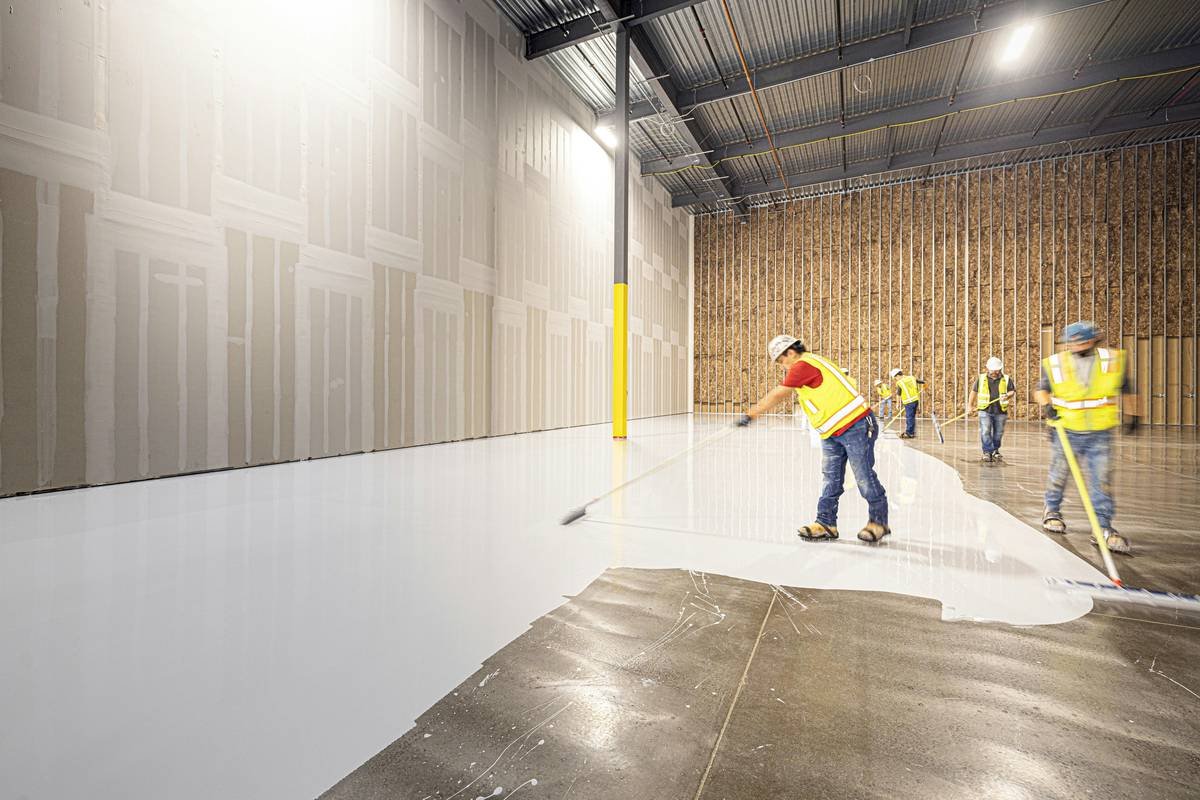
According to the Resilient Floor Covering Institute (RFCI), solvent-based adhesives still account for roughly 12% of commercial vinyl installations—primarily in retrofit projects over existing resilient flooring, elevator cabs, marine environments, or industrial settings with extreme temperature swings.
Optimist You: “So it’s basically the Navy SEAL of vinyl adhesives?”
Grumpy You: “Only if you enjoy breathing through a respirator for six hours straight. But yeah—it gets the job done when nothing else will.”
How to Apply Solvent-Based Vinyl Adhesive Like a Pro (Without Losing Your Lungs)
I once skipped the respirator “just this once” on a tight deadline. Big mistake. Spent the next three days sounding like Darth Vader after a chest cold. Don’t be me.
Do you really need solvent-based adhesive—or are you solving the wrong problem?
Before you even crack open the can, ask: Is your substrate truly non-porous? Test with a plastic sheet taped down for 24 hours—if condensation forms underneath, moisture is present, and you might actually need a moisture mitigation system, not a stronger glue.
Step 1: Verify local VOC regulations
California’s SCAQMD Rule 1168 caps VOC content at 60 g/L for vinyl adhesives. Many solvent-based options exceed 300 g/L. Check your state’s air quality board—using non-compliant products can result in fines.
Step 2: Gear up like you’re entering a chemical lab
- NIOSH-approved organic vapor respirator (P100 cartridges)
- Nitrile gloves (latex won’t cut it—solvents eat through it)
- Explosion-proof fans for cross-ventilation
- No ignition sources nearby—many solvents are flammable!
Step 3: Prep the substrate like your license depends on it (it does)
Remove all wax, oil, or curing compounds. For existing vinyl, lightly abrade with 60-grit sandpaper. Vacuum thoroughly—any dust creates weak points.
Step 4: Trowel correctly—less is more
Use the manufacturer-recommended notched trowel (often 1/16” V-notch). Spread in small sections (max 100 sq ft). Let it flash off until tacky—usually 10–20 minutes depending on temp/humidity.
Step 5: Roll immediately and aggressively
Use a 100-lb roller within 10 minutes of placement. This ensures full contact and squeezes out trapped air. Skip this, and you’ll get telegraphing or edge lifting.
5 Non-Negotiable Best Practices for Solvent Adhesive Success
- Never mix brands. Each solvent formulation is proprietary. Mixing can cause premature curing or bond failure.
- Store upright in a cool, ventilated area. Heat accelerates solvent evaporation—even in sealed cans.
- Dispose of rags properly. Solvent-soaked rags can spontaneously combust. Use OSHA-compliant oily waste cans.
- Test adhesion first. Install a 2×2 ft sample, roll it, wait 72 hours, then do a peel test. If it lifts cleanly, abort mission.
- Document everything. Take photos of substrate prep, adhesive batch numbers, and ambient conditions. If warranty claims arise, you’ll thank yourself.
Terrible Tip Disclaimer: “Just add extra adhesive to make it stick better!” Nope. Over-application traps solvents, delays curing, and causes plasticizer migration—turning your vinyl brittle and yellow. More ≠ better. Ever.
Real Talk: How a Solvent Adhesive Saved a Commercial Gym Floor
Last winter, I was called to rescue a 4,200 sq ft LVT installation in a Brooklyn CrossFit box. The original contractor used a premium water-based adhesive over polished concrete. Within three weeks, the floor was delaminating near the showers—moisture vapor transmission rate (MVTR) was 8 lbs/1,000 sq ft/24 hrs (ASTM F1869), far above the 3-lb threshold for water-based systems.
We demoed the failed sections, applied a moisture-blocking epoxy primer, then used Bostik Pro-Solv 770—a compliant, low-odor solvent adhesive with 280 g/L VOCs (permitted under NYC’s transitional rules). Flash time: 15 minutes. Full cure: 24 hours. Six months later? Zero callbacks. Athletes are dropping barbells on it daily.
The takeaway? Solvent-based isn’t “old school”—it’s the right tool for extreme jobs. As long as you respect its power (and fumes).
FAQs About Solvent Based Vinyl Flooring Adhesive
Is solvent-based vinyl flooring adhesive waterproof?
Not exactly. While the cured film resists water, the bond can fail if moisture undermines the substrate. Always test MVTR first.
Can I use it over radiant heat?
Check the adhesive’s TDS. Most solvent types tolerate up to 85°F surface temp. Exceed that, and the bond degrades.
How long does it take to fully cure?
Tack-free in 10–30 min; walkable in 4–6 hours; full cure in 24–72 hours depending on humidity and film thickness.
Are there eco-friendly solvent adhesives?
Some newer formulations use bio-based solvents (e.g., d-limonene from citrus), but VOC levels remain high. True “green” options are still water-based or reactive urethanes.
Will it damage my vinyl planks?
Potentially. Solvents can extract plasticizers from PVC, causing shrinkage or embrittlement. Always confirm compatibility with your vinyl manufacturer—Armstrong, Shaw, and Mohawk publish approved adhesive lists.
Conclusion
Solvent based vinyl flooring adhesive isn’t glamorous, trendy, or beginner-friendly. But when you’re staring down a slick elevator cab floor or a damp basement with $5/sq ft LVP on the line, it’s often the only solution that won’t leave you eating crow (or refund checks). Respect the fumes, honor the specs, and never skip the respirator. Because in flooring, as in life: the strongest bonds aren’t always the easiest—but they’re the ones that last.
Like a Tamagotchi, your vinyl floor needs the right care—or it dies in three days.
Sticky fumes rise
Floor grips tight through sweat and tears
Job done. Coffee now.